Bowie, Maryland
Deck Lighting Installation in Bowie, MD
Deck Lighting Installation in Bowie, Maryland, with published price ranges up front, the yard, the footings, and the design settled on site, and one written figure before any work begins.
Bowie, Maryland
Deck Lighting Installation in Bowie, Maryland, with published price ranges up front, the yard, the footings, and the design settled on site, and one written figure before any work begins.
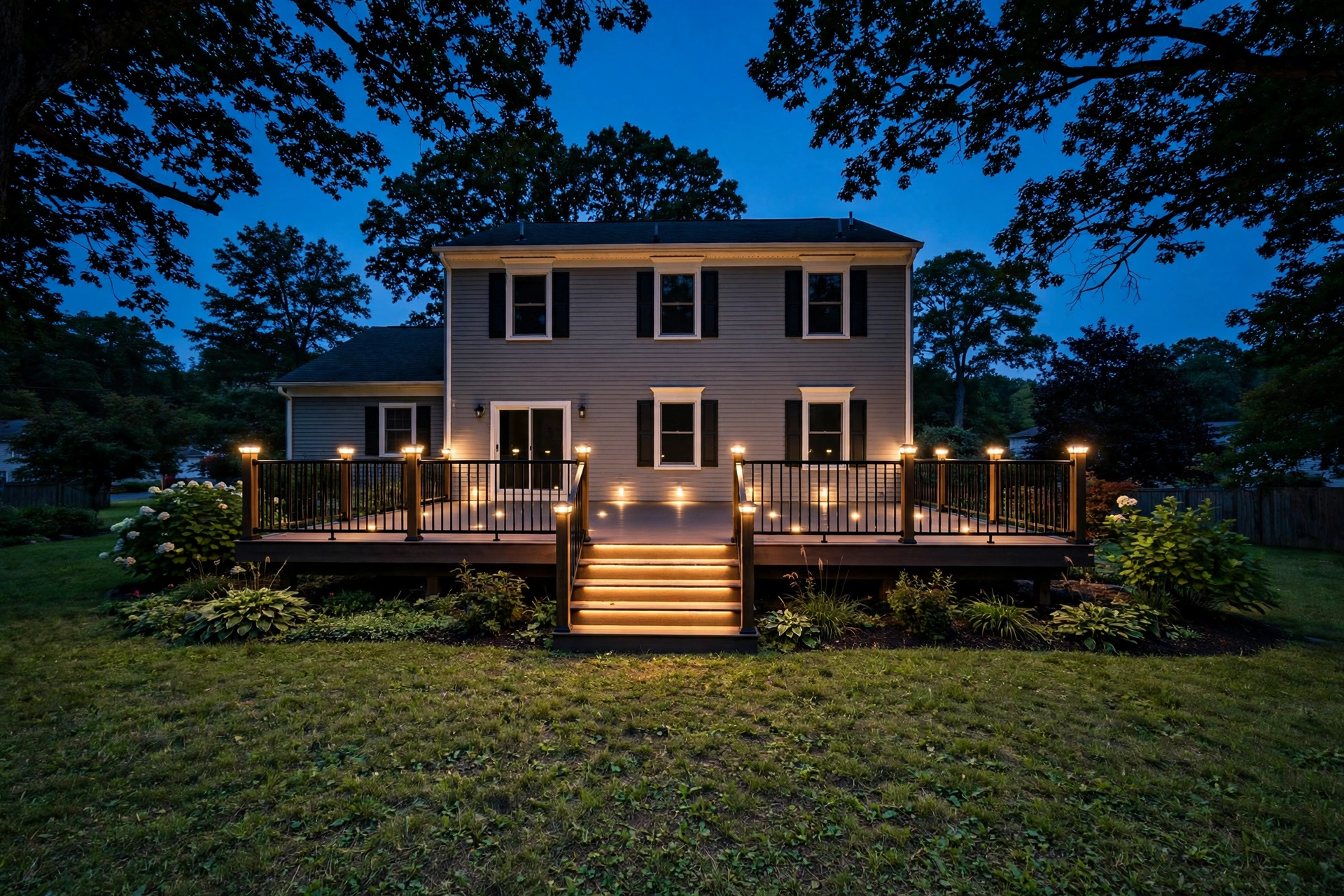
Most Bowie decks go dark right when they get pleasant. The heat breaks, dinner moves outside, and then the stairs turn into a guessing game and the railing edge disappears. We install low voltage deck lighting that fixes that quietly: light on the stair treads, a soft wash along the railing, and enough glow on the surface to carry a tray without squinting. Good deck lighting is not bright. It points down, stays warm in tone, and shows people where the level changes are.
Bowie yards are wooded, which means real darkness beyond the back door, not city glow. A few well placed fixtures do more out here than a single floodlight.
Stairs come first, always. A small light set into the riser or tucked under the tread nose marks each step, so feet find the edge without a flashlight. On long Bowie stair runs dropping to sloped yards, that step by step marking is the whole safety argument in one detail.
Railings come second. Post cap lights show where the deck ends on a dark night, while under rail lighting throws a soft ribbon of light onto the boards without glare. Recessed pucks set flush into the decking fill the gaps near doorways, grill zones, and seating corners. A fixture near the door threshold matters too, because the step between a lit kitchen and a dark deck is where eyes adjust worst.
Nearly all residential deck lighting runs on low voltage cable fed from a transformer near the house. Low voltage is safer to run through a deck frame, easier to extend later, and sips power. Modern LED fixtures run cool and draw less than one old porch bulb for a whole deck of lights.
The transformer sets the schedule, on at dusk and off at an hour you choose, with photocell control. Cable routing matters more than fixture count. Runs tucked under the deck, protected at corners, and mapped as we install can be serviced later without tearing boards up to hunt for a wire.
Lighting added during a deck build is simplest, since the frame is open. Added to an existing deck, it takes more care, fishing cable beneath boards and around covered joists.
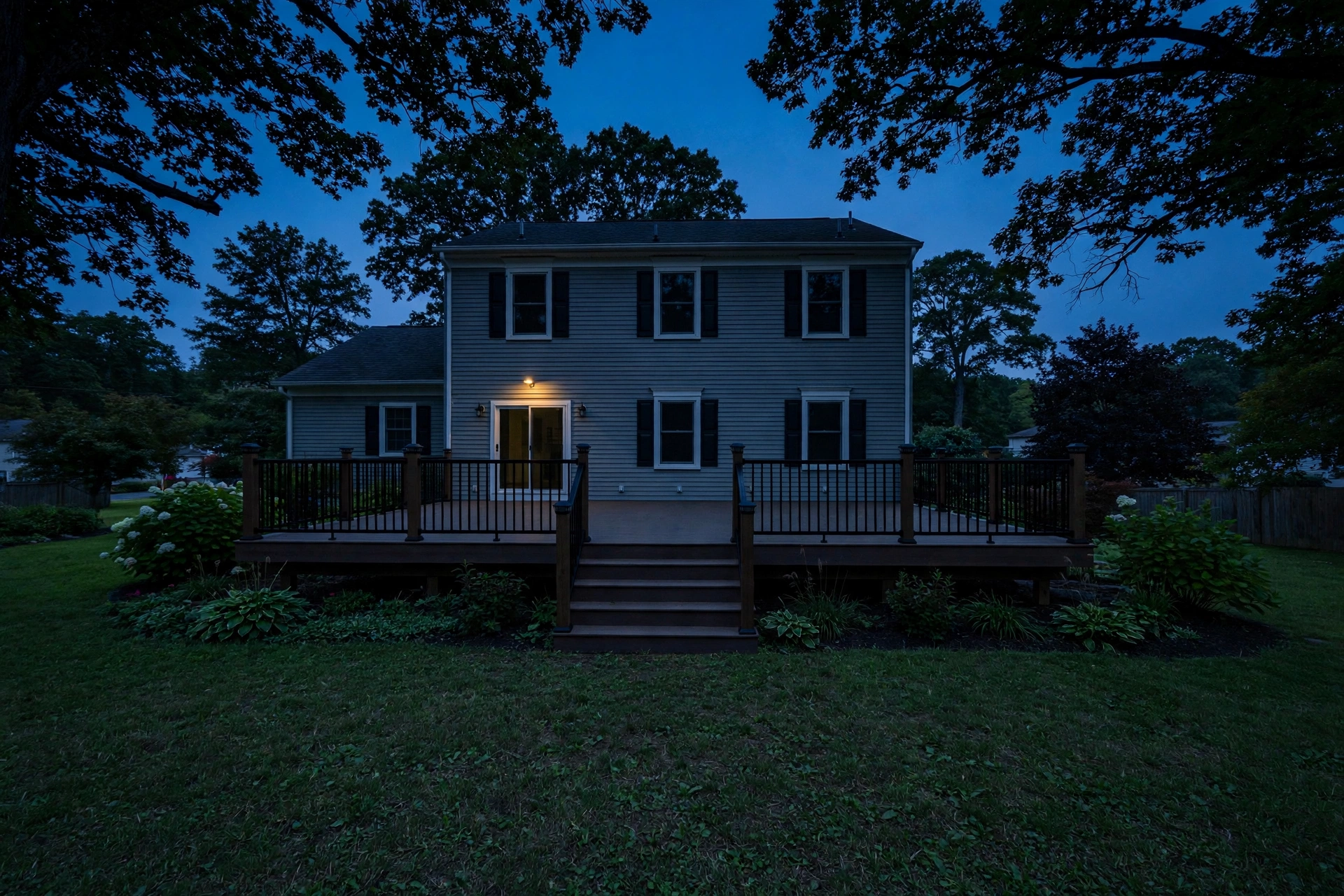
A Heather Hills deck had one porch light at the back door and a full stair run down to a shaded yard that went black by eight in the evening. We installed low voltage riser lights on every stair tread, post cap lights at the corners and gate, and recessed surface lights near the door and grill, all fed from one transformer with dusk timing.
Lights first: published figures put this service at $1,250 to $3,100. Deck numbers are published figures, labeled as such because no Bowie company publishes a price list: pressure treated wood decks at $35 to $55 per square foot installed, and composite decks at $55 to $90 per square foot. We count risers and post caps on site.
Fixture count drives the total, along with stair length and how finished the underside of the deck is. A stair focused package sits low. A full layout with riser lights on a long run, under rail lighting, and recessed surface lights sits higher. Your firm figure comes after we count the stairs with you.
If a new deck or a resurfacing is already on your list, lighting belongs in that conversation early. Fixture holes, cable paths, and a transformer location are all easier with the frame open, and running cable during the build saves the fishing work later.
Published figures put deck lighting installation at $1,250 to $3,100. Fixture count, stair length, and whether cable runs openly under the deck or must be fished through a finished underside set your place in that range.
Yes, and bright is not the goal. Riser and under tread lights mark each step edge clearly, which is what feet need. Harsh light creates glare and deep shadows beside it, making steps harder to judge.
In most cases, yes. Retrofits take more labor than lighting planned during a build, but riser lights, post caps, and surface lights can all be added to a sound deck.
Most systems run from a transformer with a photocell and timer, so lights come on at dusk and shut off at an hour you choose. Zones can be grouped too.
Very little. LED fixtures run cool and last a long time. An occasional lens cleaning covers most seasons.
A well planned layout should not. Fixtures point down at treads, rails, and boards rather than out into the yard, and warm, low output light stays on your deck.
Tell us about the deck you want. We read every request that comes in and respond with the published range for that kind of work and the next step, starting with a visit to measure the yard and talk through design and materials.
Prefer to talk it through first? Send the form and we will call you back at the number you give us.