Bowie, Maryland
Deck Extension in Bowie, MD
Deck Extension in Bowie, Maryland, with published price ranges up front, the yard, the footings, and the design settled on site, and one written figure before any work begins.
Bowie, Maryland
Deck Extension in Bowie, Maryland, with published price ranges up front, the yard, the footings, and the design settled on site, and one written figure before any work begins.
Plenty of Bowie decks were built for a smaller life: a table for four and a grill in the corner. Then came the bigger gatherings, the outdoor sofa, the smoker, the teenagers with friends. We build deck extensions that give an existing deck the room it is missing, matched to the current surface and structure so the finished deck reads as one deck.
An extension is its own structure, not a lean on the old one: new footings, beams, and joists, tied into the existing frame at the seam.
Honesty lives here. An extension bolts new surface onto whatever already stands. If the existing deck has soft joists, a ledger attached the old loose way, or footings that have moved in Bowie clay, repairing or replacing it often beats extending it. Extending a failing deck gives you a larger failing deck.
At the site visit we get under the existing deck and look: ledger connection, joist ends, post condition, and how much the surface has settled. Boards near the end of their life matter too, because fresh composite beside tired boards looks mismatched however tight the seam is. Sometimes the smart scope is extension plus resurfacing.
Deck building in Maryland is MHIC governed home improvement work, and Bowie projects in Prince George's County go through the county permitting process through DPIE, in general terms only. Setbacks and lot coverage shape how far a deck can grow, and those limits get checked during planning.
The seam is where extensions succeed or embarrass themselves. Board pattern on the new section should continue the old, or change deliberately at a divider board, which reads as intention rather than accident. Composite shifts shade over the years, so an exact match is sometimes impossible.
Levels deserve a decision too. Many extensions step down one full step to a lower tier, defining a dining zone up top and a lounging zone below. Others run dead level for one big platform. What does not work is an accidental lip at the seam.
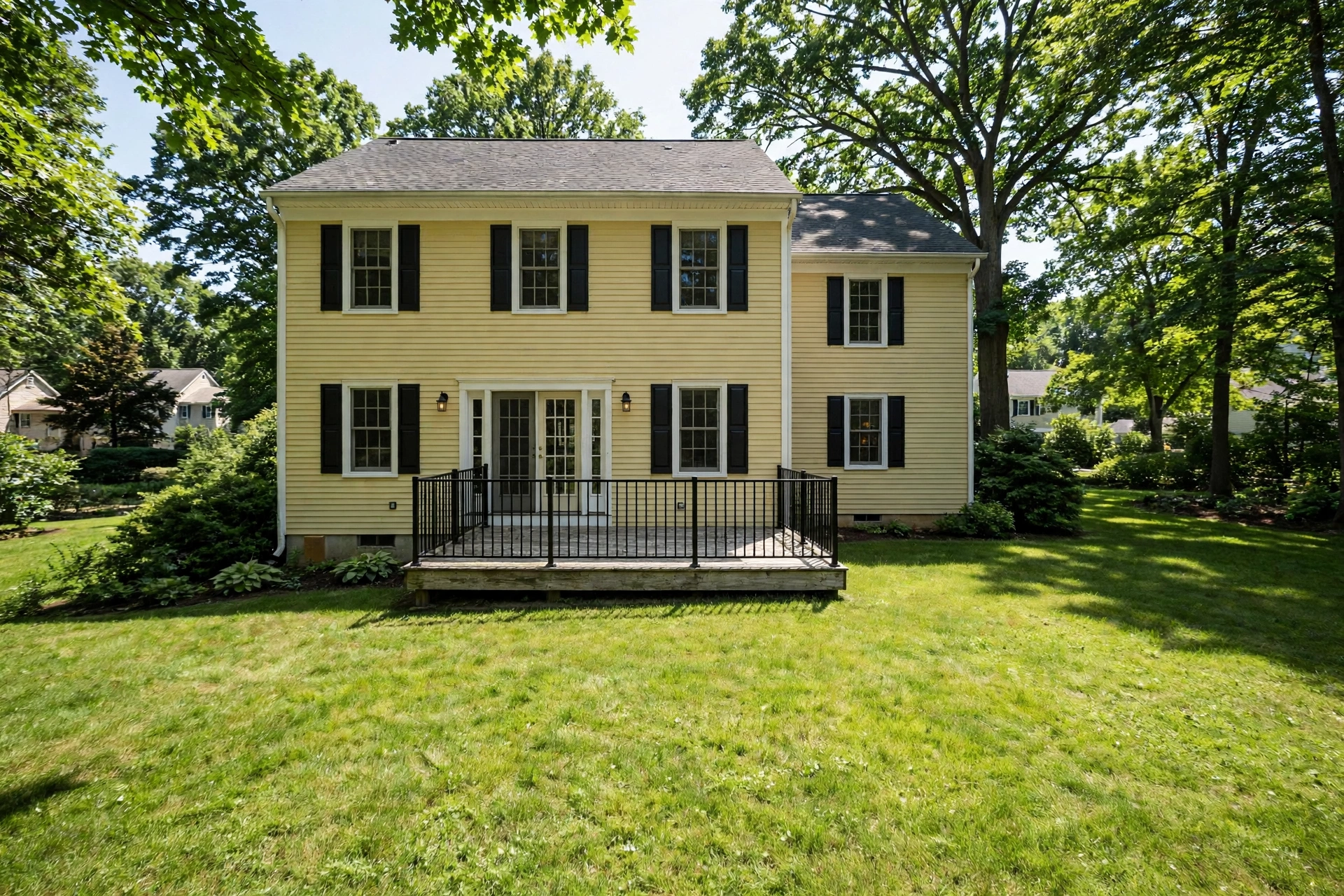
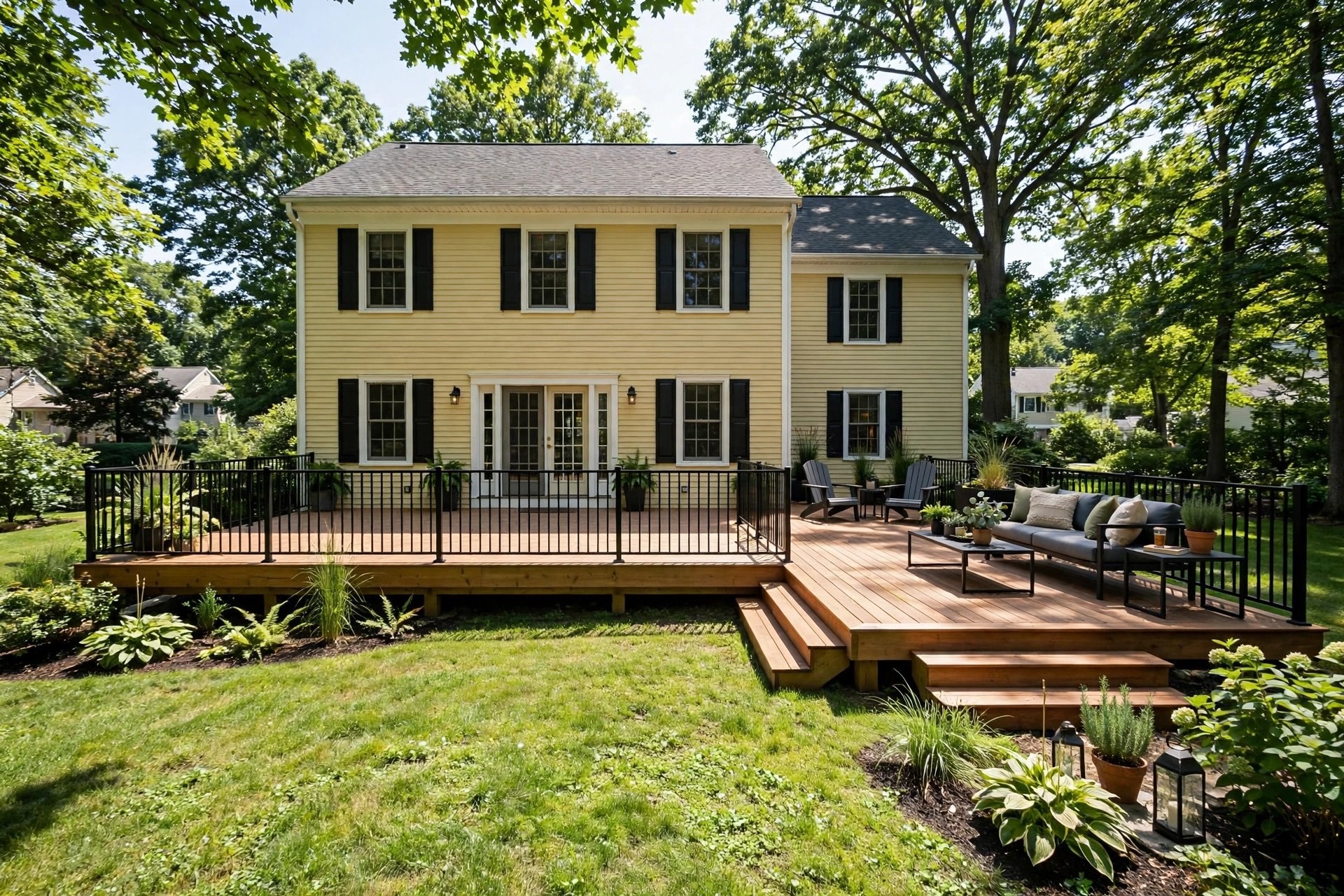
An Enfield Chase deck was sound in its framing but too small, with the grill exiled to the lawn and seating for four at most. We added a lower tier extension on new footings, stepped down one full step, and resurfaced the old section in the same composite so both levels match. The seam carries a deliberate divider board, the new tier holds a full seating group, and the grill now lives on the deck.
No Bowie company publishes a local price list, so the figures here are published figures, labeled as such. Published guides put pressure treated wood decks at $35 to $55 per square foot installed, and composite decks at $55 to $90 per square foot. For an extension, published figures put this service at $7,600 to $15,200.
Added square footage drives the figure, followed by material and whether the old section needs work in the same project. A modest wood extension off a sound deck sits low. A larger composite extension with a stepped tier and resurfacing sits higher. Your firm figure waits until we have been underneath your deck.
The pattern repeats across town. The old deck keeps the table, closest to the kitchen. The new room takes the soft furniture and the reading chair in the sunny corner. It needs about ten more feet of deck in the right direction, not a bigger house.
Published figures put deck extensions at $7,600 to $15,200. Published guides put pressure treated wood at $35 to $55 per square foot installed and composite at $55 to $90, so size and material set the total.
No, and that is a useful answer. A deck with failing joists, a weak ledger, or moved footings should be repaired or replaced rather than extended. A sound deck is a fine candidate.
Fresh material beside weathered material rarely matches perfectly, especially composite. Options include a deliberate divider at the seam, or resurfacing the old section in the same project so the whole deck shares one surface age.
Yes. The new section stands on its own footings, beams, and posts, tied into the existing frame at the seam. Hanging new weight off an old frame overloads it.
Yes, and many do. A full step down defines separate zones and helps on sloped yards. It is built as a clear, even change in level, never a small lip at the seam.
Lot setbacks and coverage rules can limit how close a deck sits to property lines, and Bowie projects in Prince George's County follow the county process through DPIE, reviewed in general terms during planning.
Tell us about the deck you want. We read every request that comes in and respond with the published range for that kind of work and the next step, starting with a visit to measure the yard and talk through design and materials.
Prefer to talk it through first? Send the form and we will call you back at the number you give us.