Bowie, Maryland
Composite Deck Installation in Bowie, MD
Composite Deck Installation in Bowie, Maryland, with published price ranges up front, the yard, the footings, and the design settled on site, and one written figure before any work begins.
Bowie, Maryland
Composite Deck Installation in Bowie, Maryland, with published price ranges up front, the yard, the footings, and the design settled on site, and one written figure before any work begins.
We build composite decks for Bowie homes where the old wood deck has done its years and the owners want a surface that holds up under shade and daily use without a yearly sanding and sealing cycle. A composite deck still starts with a proper wood frame underneath. The boards on top change. The structure, footings, and ledger connection carry the same weight of responsibility as any deck we build.
Bowie yards make the case for composite on their own. Many lots in Belair sit under mature trees, and north facing boards stay damp long after rain. Algae films form in the shade and make old wood slick, while sun baked sections crack and lift splinters in the same season. Composite boards handle that split life better than raw lumber, and color holds instead of fading in patches.
A composite installation covers the full build, not just new boards over old framing. We set concrete footings dug for Bowie clay soil, frame with pressure treated lumber, attach the ledger board to the house with flashing and fasteners that meet current code practice, and then lay the composite decking, fascia, and railing the design specifies.
Footings deserve a plain word here. Shallow footings set in the 1990s have heaved across this city because clay expands, contracts, and pushes. A new deck needs footings deep enough and solid enough to stay put through wet springs and dry late summers. We dig, inspect the hole, and pour for the soil actually in your yard.
Board layout is planned before the first board is cut. Picture framing at the edges, breaker boards on longer runs, and hidden fastener systems all change how the finished deck reads from the back door. Stair treads, landing size, and railing posts are laid out at the same time, so the deck works as one piece.
Owners ask most often about heat, fading, and upkeep. Capped composite boards carry a polymer shell that resists staining and moisture at the surface, and that shell matters in Bowie. Spilled drinks, wet leaves sitting for a week under an oak, and muddy paws all clean off a capped board more easily than bare wood.
Heat is real and worth planning around. Darker boards get hot in direct July sun, the same way dark shingles and asphalt do, while lighter colors run cooler under bare feet. Decks under heavy tree cover in Belair rarely face the worst of it, while open south facing yards in Chapel Forge or White Marsh should weigh color choice with barefoot use in mind. We talk through that tradeoff at the design stage, samples in hand, in the actual light of your yard.
Upkeep drops, but it does not vanish. A composite deck wants a wash with soap and water, a check of the gaps between boards so debris does not trap moisture, and a look at railing and stair connections each season. What goes away is the stripping, sanding, and resealing cycle that wood demands.
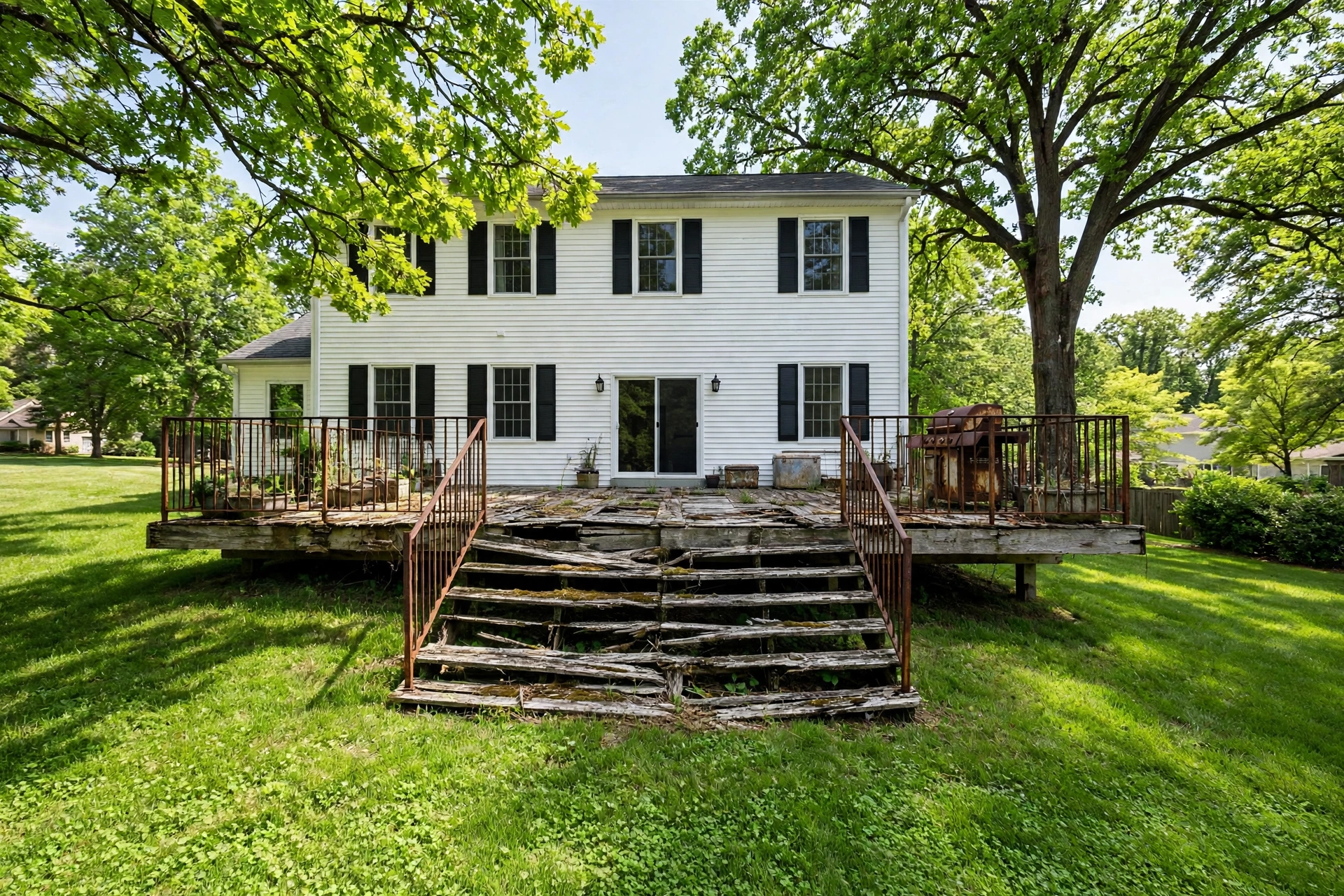
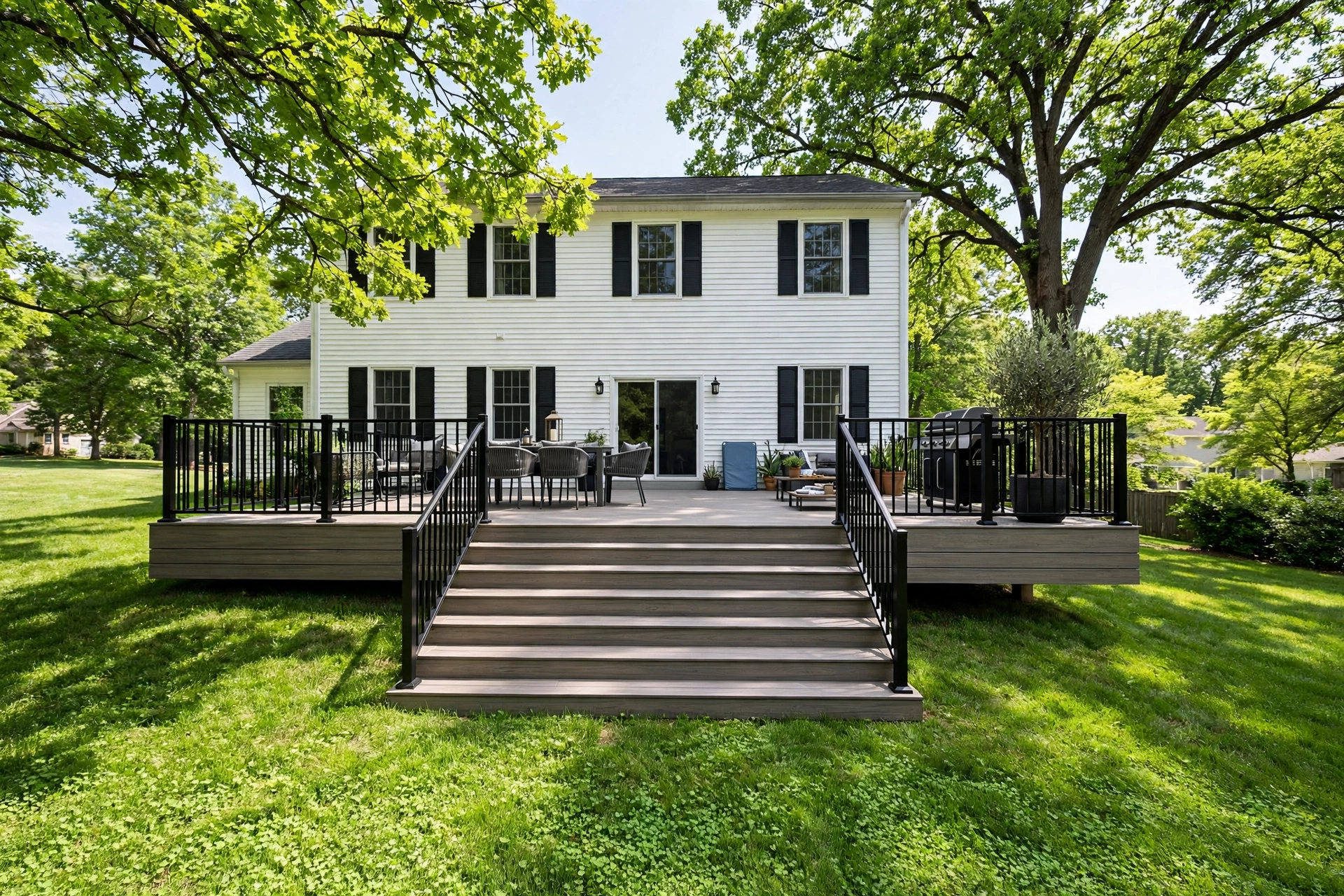
A White Marsh home had a worn wood deck with soft stair stringers, surface rot at the shaded end, and a ledger connection from an older build that needed full correction. We removed the old deck, dug new footings in clay soil, framed a new structure, corrected and flashed the ledger attachment, and finished the deck in capped composite boards with a picture frame border and a matching railing system. The shaded end was rebuilt with airflow kept open underneath so the frame can dry after rain.
No Bowie company publishes a local price list, and this page will not pretend otherwise. The figures here are published figures from national cost guides, labeled as such, plus the range we quote from for this service. Published guides put composite decks at $55 to $90 per square foot installed. Published guides put typical deck projects overall at $15,000 to $25,000. For composite deck installation through Bowie Deck Company, most projects fall between $16,800 to $29,500, and your firm figure comes from a site visit and a written scope.
Size moves the figure first. A compact deck behind a rancher prices very differently from a wide deck that wraps a walkout basement and carries two sets of stairs. Railing choice moves it next, since composite and metal systems cost more than basic wood rail. Demolition of an old deck, footing conditions in clay, stair count, and board grade shift the total as well. Permits through Prince George's County DPIE are part of deck work in this county, built into the project plan.
We start with the quote form at the bottom of this page. Tell us the rough size you have in mind, whether an old deck needs to come out, and what the deck needs to do, dining space, a grill station, or a solid place to sit under the trees. A site visit follows. We measure, check the ledger area and the soil, look at drainage, and note any HOA rules that apply to your street, since communities such as Woodmore, Fairwood, and Mitchellville set rules on size, railing style, and materials.
Design comes next, with board colors, railing, stairs, and lighting settled on paper, then the county permit step. Build days run in a clear order. Old material comes out. Footings are dug and poured. Framing goes up and gets inspected as the county process requires. Boards, fascia, and railing follow, and the job ends with a walkthrough checking stair feel, board gaps, and cleanup.
We state findings plainly at every stage. If the house rim behind the old ledger is damaged, you hear about it with photos and options, not after the new deck is hiding it again.
In published guides, composite decks run $55 to $90 per square foot installed, and typical deck projects run $15,000 to $25,000 overall. Most composite deck installations through Bowie Deck Company fall between $16,800 to $29,500. Size, railing, stairs, demolition of an old deck, and footing conditions set your place in that range, and a site visit produces the firm figure.
Composite boards resist rot, insects, and surface cracking far longer than wood decking, and capped boards hold color well for many years. The frame underneath is still wood, so good footing work, proper flashing, and open airflow decide how long the whole structure serves. Material at the top cannot rescue poor work below it.
Deck building in Maryland sits under MHIC governed home improvement rules, and new decks in Bowie need a county building permit through Prince George's County DPIE. The permit step covers footings, framing, ledger attachment, and railing height and spacing. We plan that step into the project sequence from the start.
Darker boards in full summer sun can get hot, much like other dark outdoor surfaces. Lighter colors stay cooler, and shaded Bowie lots reduce the issue a great deal. If your yard is open and sunny and barefoot use matters to your family, color choice should be part of the design talk early.
Sometimes a frame is sound enough to keep, but many Bowie frames from the 1990s carry undersized footings, weak ledger connections, or rot at the posts and stringers. A site visit checks the frame member by member. If the structure is at the end of its life, new boards over it would waste good material on a weak base.
Wash the surface with soap and water as grime and algae film build up, clear leaves and debris from the gaps between boards, and keep the area under the deck open enough to dry. Shaded decks in Bowie grow algae film faster than sunny ones, so a spring and fall wash keeps the surface from turning slick.
Tell us about the deck you want. We read every request that comes in and respond with the published range for that kind of work and the next step, starting with a visit to measure the yard and talk through design and materials.
Prefer to talk it through first? Send the form and we will call you back at the number you give us.